<-- Icons -->
  • People
  • Research
  • Projects
  • Publications
  • Resources
ViCoS Lab

Domen Tabernik, PhD

Research Associate
  domen.tabernik@fri.uni-lj.si
  +386 1 479 8245

About

Domen Tabernik is actively researching various problems in the field of computer vision. His primary work encompasses various hierarchical models such as compositional hierarchy or deep neural network, which were also the subject of his doctoral dissertation. He is improving the representation of visual objects using various hierarchical models and applying them to different applications related to detection and recognition of semantic objects in images. In addition to his basic research on visual object representation, he is also working on other computer vision problems, such as semi-supervised and unsupervised learning. He collaborated on various research projects, where he participated in the development of various computer vision methods for different practical problems, such as computer vision for mobile devices, industrial scale defect detection, and recognition and detection of a large number of traffic signs.

Research Topics
Deep compositional networks

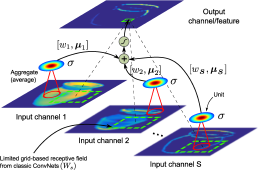
We propose a novel deep network architecture that combines the benefits of discriminative deep learning and the benefits of compositional hierarchies. As one of the benefits we emphasize the ability to automatically adjust receptive fields to either small or large receptive fields depending on the for problem at hand and the ability to visualize deep features through explicit compositional structure

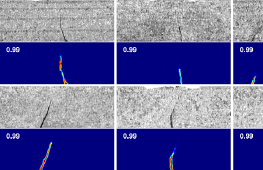
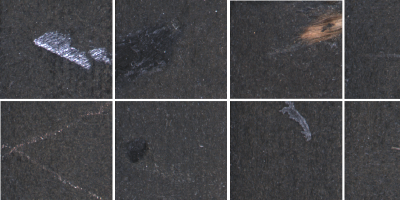
Industrial surface defect detection

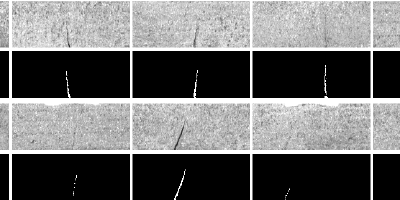
The developed methods allow specialization for large defect detection on various indistrual items such as cracks, smudges, imperfections etc. The methods are learning-based and are thus robust, run realtime and are applicable to a wide range of real problems.

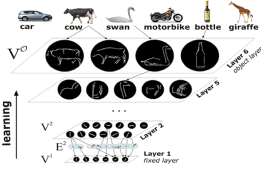
Learning a hierarchy of parts

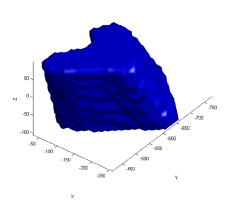
We deal with a problem of Multi-class Object Representation and present a framework for learning a hierarchical shape vocabulary capable of representing objects in hierarchical manner using a statistically important compositional shapes. The approach takes simple oriented contour fragments and learns their frequent spatial configurations. These are recursively combined into increasingly more complex and class specific shape compositions, each exerting a high degree of shape variability

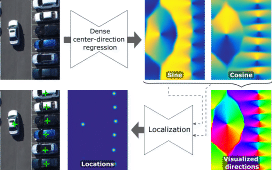
Center-Directions for counting and localization

This research focuses on developing a novel point-supervised learning approach for object counting and localization based on regression of center-directions. We introduce an architecture for dense regression of center-directions, splitting the problem into domain-specific dense regression and a lightweight, domain-agnostic localization network.

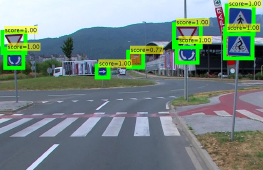
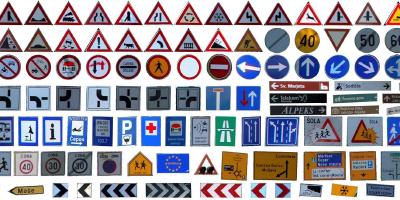
Traffic-sign detection

We explore automation of traffic-sign inventory management using deep-learning models. Models such as Faster R-CNN and Mask R-CNN are improved and applied to traffic sign detection. Instead of specializing in automated detection for only several traffic sign categories we explore possibility of automating the detection of over 200 different traffic signs that are needed to automate the traffic-sign inventory management.

Histogram of compositions

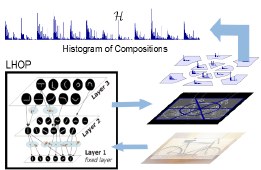
As extension to LHOP model, we have developed a shape descriptor capable of using compositional parts learnt using the LHOP model to provide a descriptor that is compatible with HOG descriptor and can be easily used as direct replacement.

ViCoS Eye

ViCoS Eye is an experimental online service that aims to demonstrate a state-of-the-art computer vision object detection and categorization algorithm developed in our laboratory. Web-service is available in a form of a web-page and in a form of an Android application.

Vision for robotic manipulation

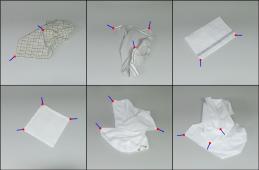
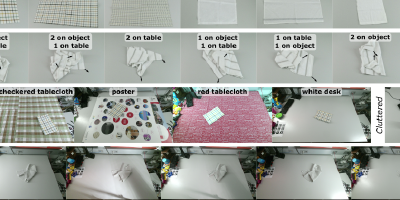
Developing novel vision-based methods for robotic manipulation, with a focus on grasping deformable objects such as cloths, towels, and garments. Introducing CeDiRNet-3DoF and the ViCoS Towel Dataset for benchmarking and advancing cloth manipulation in robotics.

Downloads and Code

 
CeDiRNet

PyTorch implementation of Center Direction Regression Network for object counting and localization with point supervision from Pattern Recognition 2024 paper.

 
CeDiRNet-3DoF

PyTorch implementation of Center Direction Regression Network for Grasping Point Localization on Cloths from IEEE Robotics and Automation Letters 2024 paper.

 
ViCoS Towel Dataset

Dataset for benchmarking robot cloth grasping models on 3DoF task.

 
Kolektor Surface-Defect Dataset (KolektorSDD/KSDD)

Dataset for defect-detection in industrial surfaces

 
Mixed SegDec-Net

PyTorch implementation of SegDec-Net using weakly, mixed and fully supervised learning for surface defect detection. Implementation from ICPR2020 and COMIND2021 papers.

 
Kolektor Surface-Defect Dataset 2 (KolektorSDD2 / KSDD2)

Dataset for defect-detection in industrial surfaces

 
SegDec-Net

TensorFlow implementation of SegDec-Net for sufrace defect detection using deep neural networks. Implementation from JIM2019 paper.

 
DAU-Conv2D

TensorFlow implementation of displaced aggregation units for deep neural networks. Implementation from CVPR2018 and IJCV2020 papers.

 
DFG Traffic Sign Data Set

Traffic sign dataset cosisting of 200 categories in over 7000 images

 
Detectron for traffic signs

Fork of the Detectron with added modifications for traffic sign detection. Implementation from TITS2020 paper.

Current projects

EOFuseREarth Observation with Sensor-Fusion and Representation Learning

January 2025 - April 2026
This ESA funded project investigates the relationship between sensor fusion and self-supervised learning for data-driven Earth Observation. We focus on the role of self-supervised deep learning for sensor fusion from the perspective of different sources with different spatial resolutions and spectral coverage. The project is grounded in a real-world application in the field of hydrology, where the goal is to predict the water level in rivers using satellite and drone imagery.

MUXADMultimodal Image Understanding for Explainable Anomaly Detection

January 2025 - December 2027
The functional objective of the project is to advance anomaly detection in images by developing multimodal models that integrate visual and linguistic information to not only detect if and where anomalies occur but also explain why. The main research goal is to create novel methods for semantic image understanding, zero-shot multimodal anomaly detection, and multimodal explanations that improve AI’s interpretability and transparency while reducing reliance on annotated data.

RoDEORobust Deep Learning for Earth Observation​

January 2025 - December 2027
This ARIS funded project investigats the relationship between sensor fusion and self-supervised learning for data-driven Earth Observation. We focus on the role of self-supervised deep learning for sensor fusion from the perspective of different sources with different spatial resolutions and spectral coverage. The project is grounded in a real-world application in the field of hydrology, where the goal is to predict the water level in rivers using satellite and drone imagery.

Computer Vision

January 2019 - December 2027
Computer vision is becoming a focal problem area of artificial intelligence. On the wings of deep learning it has become very powerful tool for solving various problems involving processing of visual information. In the framework of this programme we are addressing several research questions ranging from visual tracking to visual learning for autonomous robots, with a special emphasis on going beyond supervised deep learning.

Past projects

MV4.0Data-driven framework for development of machine vision solutions

October 2021 - September 2024
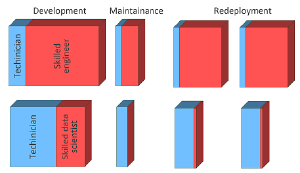
The functional objective of the project is to shift the paradigm in the development of machine vision solutions from hand-engineered specific solutions to data-driven learning-based design and development that would enable more general, efficient, flexible and economical development, deployment and maintenance of machine vision systems. The main research goal of this project is to develop novel deep learning methods for iterative, active, robust, weak, self-, unsupervised and few-shot learning that would reduce the amount of needed annotated data.

DIVIDDetection of inconsistencies in complex visual data using deep learning

July 2018 - December 2021
The objective of the project is to develop novel deep learning methods for modelling complex consistency and detecting inconsistencies in visual data using training images annotated with different levels of accuracy. The main project goal is to go beyond the traditional supervised learning, where all anomalies on all training images have to be adequately labelled.

GOSTOPBuilding Blocks, Tools and Systems for the Factories of the Future

November 2016 - January 2020
The aim of the GOSTOP programme was to accelerate the development of the Factories of the Future concept in Slovenia and to provide solutions to the current needs of Slovene industry. Our goal was to develop efficient machine vision algorithms, coupled with machine learning approaches, which would allow for fast and flexible adaptation of visual inspection systems to be able to deal with novel quality control problems.

ViLLarDMaintenance of large databases based on visual information using incremental learning

July 2014 - June 2017
The main goal of the project is to develop a framework for semi-supervised interactive incremental learning as well as specific methods for visual learning and recognition that will increase the quality and efficiency of large visual information databases maintenance.

CV4footStudy and comparison of advanced computer vision methods for foot modelling in a real-world environment

April 2014 - September 2014
In this student project we were exploring the potential of using computer vision techniques for footwear recommendation systems. The maingoal was to improve existing methods with advanced computer vision technologies, to solve the problem of automatic feet modelling, and to determine the suitability of the latest mobile devices for such advanced computer vision algorithms.

LeOPartsLearning a large number of visual object categories for content-based retrieval in image and video databases

April 2010 - August 2013
The challenge this project addressed was development of a methodology that would bridge the gap between the computer-centered low-level image features and the high-level human-centered semantic meanings. The methodology explored was hierarchical compositional models, enriched by discriminative information and extended to online learning.

Computer vision for mobile computing and interaction (RS)

January 2009 - December 2012
The use of computer vision makes for a very intuitive interaction with mobile device, greatly simplifying it. We developed computer vision methods suitable for mobile devices, and use them to implement designed interaction scenarios in prototype applications.

Publications

  •  
    Aktivno učenje z mešanimi oznakami za detekcijo površinskih napak z globokimi nevronskimi mrežami
    Domen Tabernik and Danijel Skočaj
    ERK, 2024
  •  
    Center Direction Network for Grasping Point Localization on Cloths
    Domen Tabernik, Jon Muhovič, Matej Urbas and Danijel Skočaj
    IEEE Robotics and Automation Letters, IEEE, 2024
  •  
    Demonstracijska celica za prikaz globokega učenja v praktičnih aplikacijah
    Domen Tabernik, Peter Mlakar, Jakob Božič, Luka Čehovin Zajc, Vid Rijavec and Danijel Skočaj
    ROSUS 2024 - Računalniška obdelava slik in njena uporaba v Sloveniji 2024, 2024
  •  
    Dense Center-Direction Regression for Object Counting and Localization with Point Supervision
    Domen Tabernik, Jon Muhovič and Danijel Skočaj
    Pattern Recognition, 2024
  •  
    Automated detection and segmentation of cracks in concrete surfaces using joined segmentation and classification deep neural network
    Domen Tabernik, Matic Šuc and Danijel Skočaj
    Construction and Building Materials, 2023
  •  
    Lokalizacija in ocenjevanje lege predmeta v treh prostostnih stopnjah s središčnimi smernimi vektorji
    Domen Tabernik, Jon Muhovič and Danijel Skočaj
    ERK, 2023
  • Fully supervised and point-supervised ship detection using center prediction, LUVSS-2021-11
    Domen Tabernik, Jon Muhovič and Danijel Skočaj
    Technical Report, 2021
  •  
    Mixed supervision for surface-defect detection: from weakly to fully supervised learning
    Jakob Božič, Domen Tabernik and Danijel Skočaj
    Computers in Industry, Elsevier, 2021
  •  
    End-to-end training of a two-stage neural network for defect detection
    Jakob Božič, Domen Tabernik and Danijel Skočaj
    ICPR, 2020
  •  
    O klasifikaciji slik v ne-enolično določljive razrede
    Jon Muhovič, Domen Tabernik and Danijel Skočaj
    ERK, 2020
  •  
    Segmentation-Based Deep-Learning Approach for Surface-Defect Detection
    Domen Tabernik, Samo Šela, Jure Skvarč and Danijel Skočaj
    Journal of Intelligent Manufacturing, 2020
  •  
    Spatially-Adaptive Filter Units for Compact and Efficient Deep Neural Networks
    Domen Tabernik, Matej Kristan and Aleš Leonardis
    International Journal of Computer Vision, 2020
  •  
    Deep Learning for Large-Scale Traffic-Sign Detection and Recognition
    Domen Tabernik and Danijel Skočaj
    Transactions on Intelligent Transportation Systems, IEEE, 2019
  •  
    Deep-learning-based computer vision system for surface-defect detection
    Domen Tabernik, Samo Šela, Jure Skvarč and Danijel Skočaj
    Proceedings of the 12th International Conference on Computer Vision Systems, 2019
  •  
    Improving Traffic Sign Detection with Temporal Information
    Domen Tabernik, Jon Muhovič, Alan Lukežič and Danijel Skočaj
    Proceedings of the 23rd Computer Vision Winter Workshop, 2018
  •  
    Spatially-Adaptive Filter Units for Deep Neural Networks
    Domen Tabernik, Matej Kristan and Aleš Leonardis
    Computer Vision and Pattern Recognition, 2018
  •  
    Detekcija napak na površinah z uporabo anotiranih slik in globokim učenjem
    Domen Tabernik and Danijel Skočaj
    Proceedings of the 26th International Electrotechnical and Computer Science Conference, ERK 2017, 2017
  • Detekcija točkovnih horizontalnih prometnih znakov, Tehnično poročilo, TR-LUVSS-17/02
    Jon Muhovič, Domen Tabernik and Danijel Skočaj
    Technical Report, 2017
  •  
    Pregled programskih orodij za globoko učenje z vidika uporabe v industrijskih aplikacijah
    Domen Tabernik and Danijel Skočaj
    ROSUS 2017, 2017
  •  
    Towards large-scale traffic sign detection and recognition
    Peter Uršič, Domen Tabernik, Rok Mandeljc and Danijel Skočaj
    Proceedings of the 22nd Computer Vision Winter Workshop, 2017
  •  
    Towards Deep Compositional Networks
    Domen Tabernik, Matej Kristan, Jeremy L. Wyatt and Aleš Leonardis
    23rd International Conference on Pattern Recognition, 2016
  • Understanding Convolutional Neural Networks for Object Recognition
    Domen Tabernik
    Deep Learning Meetup - Ljubljana, 2016
  • Visual Detection of Business Cards: Segmentation
    Domen Tabernik
    Technical Report, 2016
  •  
    Adding discriminative power to a generative hierarchical compositional model using histograms of compositions
    Domen Tabernik, Aleš Leonardis, Marko Boben, Danijel Skočaj and Matej Kristan
    Computer Vision and Image Understanding, 2015
  •  
    Domain-specific adaptations for region proposals
    Domen Tabernik, Rok Mandeljc, Danijel Skočaj and Matej Kristan
    Proceedings of the 20th Computer Vision Winter Workshop, 2015, 2015
  •  
    Quality of region proposals in traffic sign detection and recognition
    Domen Tabernik, Rok Mandeljc and Danijel Skočaj
    Proceedings of the 24th International Electrotechnical and Computer Science Conference, ERK 2015, 2015
  •  
    Traffic sign classification with batch and on-line linear support vector machines
    Rok Mandeljc, Domen Tabernik, Matej Kristan and Danijel Skočaj
    Proceedings of the 24th International Electrotechnical and Computer Science Conference (ERK), 2015
  • Visual Detection of Business Cards: Key-Point Correspondences Filtering
    Domen Tabernik
    Technical Report, 2015
  • Visual Detection of Business Cards: Study of Interest Key-point Detectors
    Domen Tabernik
    Technical Report, 2015
  •  
    Towards a large-scale category detection with a distributed hierarchical compositional model
    Domen Tabernik, Matej Kristan, Marko Boben and Aleš Leonardis
    Proceedings of the 23th International Electrotechnical and Computer Science Conference, ERK 2014, 2014
  •  
    Using discriminative analysis for improving hierarchical compositional models
    Domen Tabernik, Matej Kristan, Marko Boben and Aleš Leonardis
    Proceedings of the 19th Computer Vision Winter Workshop, 2014
  •  
    A web-service for object detection using hierarchical models
    Domen Tabernik, Luka Čehovin Zajc, Matej Kristan, Marko Boben and Aleš Leonardis
    The 9th International Conference on Computer Vision Systems, 2013
  •  
    Adding discriminative power to hierarchical compositional models for object class detection
    Matej Kristan, Marko Boben, Domen Tabernik and Aleš Leonardis
    18th Scandinavian Conference on Image Analysis, SCIA, 2013
  •  
    Hypothesis verification with histogram of compositions improves object detection of hierarchical models
    Domen Tabernik, Matej Kristan, Marko Boben and Aleš Leonardis
    Proceedings of the 22th International Electrotechnical and Computer Science Conference, ERK 2013, 2013
  •  
    Room Categorization Based on a Hierarchical Representation of Space
    Peter Uršič, Domen Tabernik, Marko Boben, Danijel Skočaj, Aleš Leonardis and Matej Kristan
    International Journal of Advanced Robotic Systems, 2013
  •  
    ViCoS Eye - a webservice for visual object categorization
    Domen Tabernik, Luka Čehovin Zajc, Matej Kristan, Marko Boben and Aleš Leonardis
    The 18th Computer Vision Winter Workshop, 2013
  •  
    ViCoS Eye - Spletna storitev za kategorizacijo vizualnih objektov
    Domen Tabernik, Luka Čehovin Zajc, Matej Kristan, Marko Boben and Aleš Leonardis
    ROSUS, 2013
  •  
    Increased complexity of low-level structures improves histograms of compositions
    Domen Tabernik, Matej Kristan, Marko Boben and Aleš Leonardis
    Proceedings of the 21th International Electrotechnical and Computer Science Conference, ERK 2012, 2012
  •  
    Learning statistically relevant edge structure improves low-level visual descriptors
    Domen Tabernik, Matej Kristan, Marko Boben and Aleš Leonardis
    International Conference on Pattern Recognition, 2012
Faculty of Computer and Information Science

Visual Cognitive Systems Laboratory

University of Ljubljana

Faculty of Computer and Information Science

Večna pot 113
SI-1000 Ljubljana
Slovenia
Tel.: +386 1 479 8245